There comes a moment in many families when the house that once represented independence begins quietly asking for a little backup. The stairs feel steeper. Driving after dark feels less comfortable. A small repair becomes a weekend project that nobody has the energy to enjoy.
The family starts discussing options. Should Mom move in? Should Dad sell the house? Is it time for assisted living? Could the basement be converted? And, somewhere between the concern and the logistics, everyone realizes that loving one another very much does not necessarily mean wanting to share a kitchen, a front door or the thermostat.
That is where an accessory dwelling unit can fit. An ADU is a smaller, independent home on the same property as the primary residence. For an aging parent, it can offer something that is surprisingly hard to find: privacy, safety and family support in the same address.
The middle ground families have been looking for
Most senior-housing choices sit at opposite ends of the spectrum. A parent stays alone in a home that may no longer fit, or moves into a setting where much of daily life is organized by someone else. Moving into an adult child's house can be a loving solution, but it can also blur routines and roles. The child becomes a host and caregiver. The parent may feel like a guest. Nobody knows who finished the coffee.
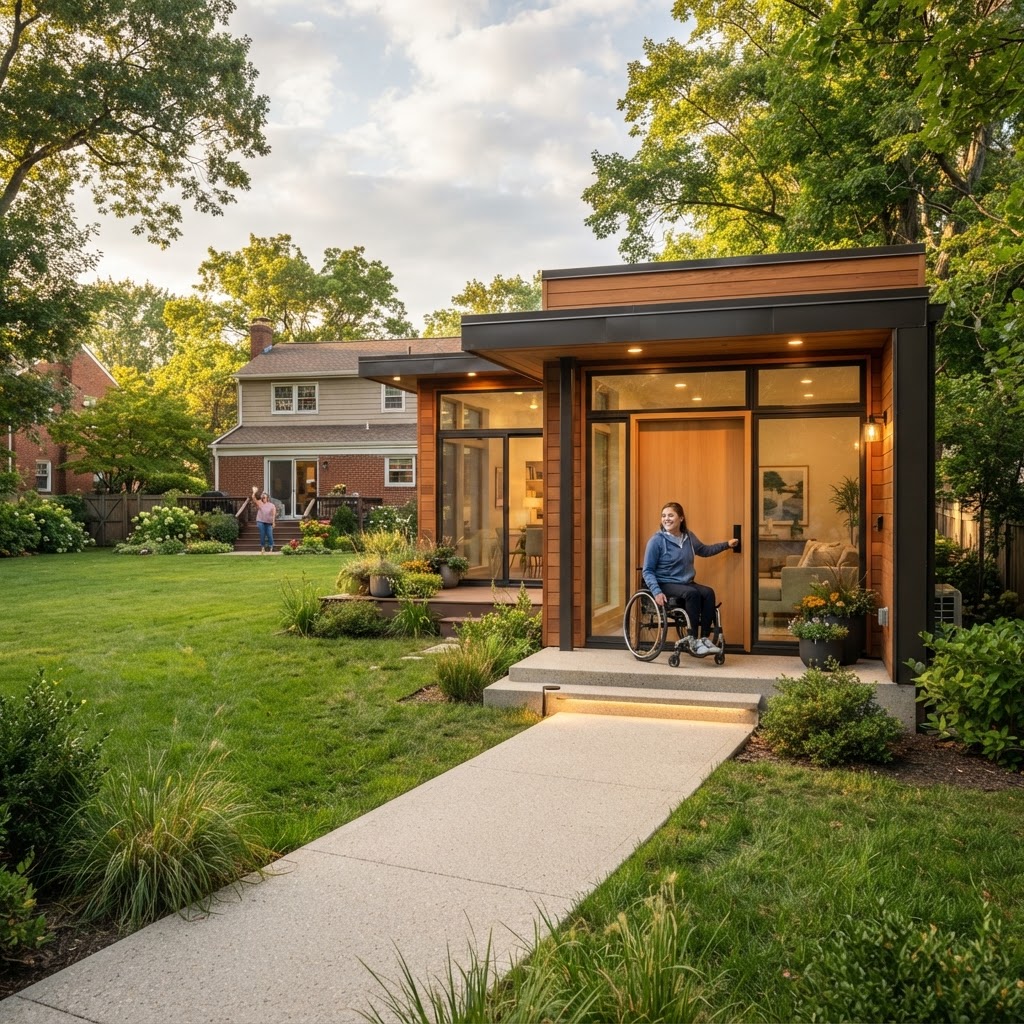
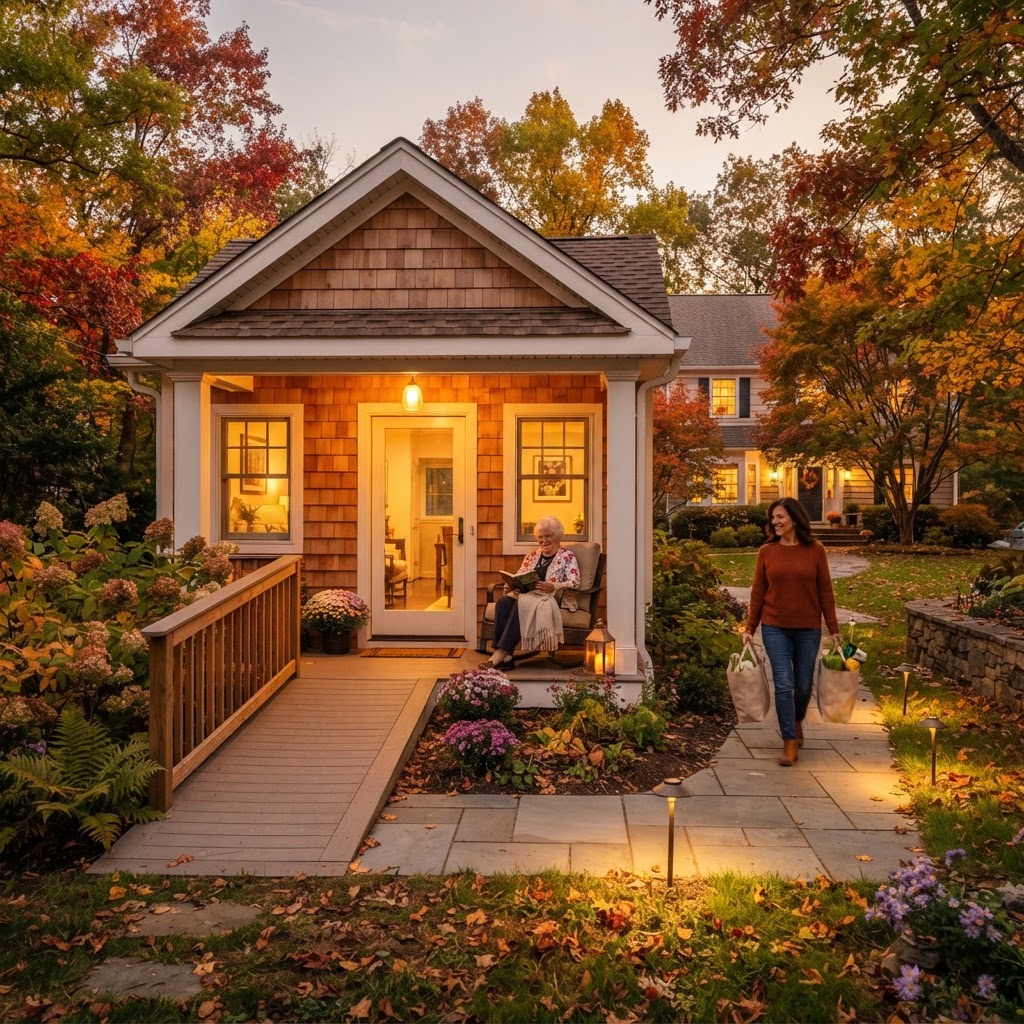
A backyard home creates a middle path. The parent can have a private bedroom, bathroom, living area and kitchen. They can wake up on their own schedule, invite friends over and keep familiar furniture. The adult child can help with groceries, appointments, meals or emergencies without being in the same living space all day.
That small physical separation can protect the relationship. Support feels available rather than imposed. Privacy remains part of the plan instead of becoming the first thing sacrificed.
Proximity can make caregiving more practical
Caregiving is often made difficult by distance, not by the individual tasks. A fifteen-minute visit becomes a ninety-minute round trip. A missed phone call creates panic. Coordinating a repair, a medication delivery or a home-health aide becomes another layer of scheduling.
When a parent lives on the same property, small needs can stay small. Someone can carry in groceries, reset the Wi-Fi, change a light bulb or check why the heat is making that noise. Family can share dinner without every meal becoming mandatory. Grandchildren can stop in for ten minutes rather than waiting for a formal visit.
An ADU can also make outside care easier to coordinate. A home-health aide or therapist can enter the parent's residence directly, and the family can remain nearby without taking over every interaction.
Design for today — and for the version of tomorrow nobody can schedule
The smartest time to plan accessibility is before it becomes urgent. A parent may walk comfortably today and still benefit from a no-step entrance, wider doors, a curbless shower, lever handles, better lighting and space to maneuver. These features are easier to include at the beginning than to improvise after a fall or hospital discharge.
A single-story plan is often the simplest. The path from parking to the front door should be stable and well lit. The bathroom should allow room for help if it is ever needed. Controls, outlets and storage should be reachable. Flooring should be durable and easy to navigate, not an obstacle course disguised as interior design.
The home should also feel personal. Our current home-options guide includes choices for exterior finishes, windows, doors, cabinet colors, counters and flooring, as well as accessibility-related bathroom and appliance options. The goal is not to build a tiny institution behind the house. The goal is to build Mom's home or Dad's home.
Local ordinances are already describing the family problem
Teaneck's 2025 ADU ordinance is unusually direct about why these homes matter. It identifies aging in place, caregiver options and the ability of adult children to support a parent in semi-independent living as community benefits. It permits one ADU on qualifying single-family properties in designated zones, while requiring the owner to live in either the primary home or the ADU.
Maplewood also requires the owner to live in one of the two homes. Its code permits one ADU on qualifying detached single-family properties in specified residential zones, generally between 300 and 800 square feet and subject to a percentage of the main home's living area. Montclair permits ADUs on qualifying one- and two-family properties in its R-O, R-O(A), R-1 and R-2 zones. Its current standards generally limit an ADU to between 300 and 800 square feet and no more than 40 percent of the principal building's habitable area.
Those rules are useful examples, not a substitute for a property review. Setbacks, lot coverage, drainage, utilities, historic-district requirements, parking and existing nonconformities can change the answer from one address to the next — sometimes on the same block.
How an ADU compares with the other choices
Moving into the main house
This may cost less initially if a suitable bedroom and bathroom already exist. It also provides the most immediate access to family. The tradeoff is privacy. Shared entrances, kitchens and schedules can make everyone feel as if they are permanently visiting someone else.
Converting a basement
A basement may use existing space, but stairs, ceiling height, natural light, emergency egress, moisture and a separate entrance can make it a poor fit for aging in place. Some towns also restrict where an ADU may be located; for example, Maplewood does not permit an ADU in a cellar as defined by its code.
Assisted living
Assisted living may be the right choice when a parent wants the services, social environment and staff availability it offers. An ADU should not be presented as a replacement for care that the family cannot safely coordinate. The difference is that an ADU separates the housing decision from the care decision. A parent can live near family and add home-care services as needed.
Buying or renting a nearby apartment
A nearby apartment can provide independence without construction, but availability, rent increases, accessibility and distance still matter. Nearby in New Jersey can mean five minutes on a map and thirty minutes once everyone else has discovered the same road.
A home that can have more than one chapter
An ADU built for a parent may serve the family for decades. Later it might house an adult child, a caregiver or another relative. Where local rules allow, it may eventually become a long-term rental. It could also become the smaller home for the original homeowner while the next generation moves into the primary house.
That flexibility is part of the value. A family is not only paying for a solution to this year's problem. It is creating a legal, durable home that can respond to several stages of family life.
Start with the property, not the Pinterest board
Before choosing cabinet colors or arguing over whether the guest room really needs to be a guest room, confirm the basics. Does the municipality allow the type of ADU being considered? Is the property in an eligible zone? Is there enough buildable space after setbacks and coverage limits? Can the home connect to water, sewer, electric and gas? How will emergency access, drainage, grading and parking work?
A survey and a professional feasibility review will answer questions that a photograph of the backyard cannot. At BLS ADU, we begin with a property check because a beautiful idea becomes a good project only when the lot, the rules and the family's needs agree with one another.
The best aging-in-place plan is not simply about keeping a parent close. It is about keeping the parent in control of as much of life as possible.
For many families, the answer may be closer than they think. It may be right out back.
This article is general educational information, not legal, tax, financial, benefits or construction advice. ADU approval and cost depend on the municipality, property, design and current law. Contact us to start with a property review.